
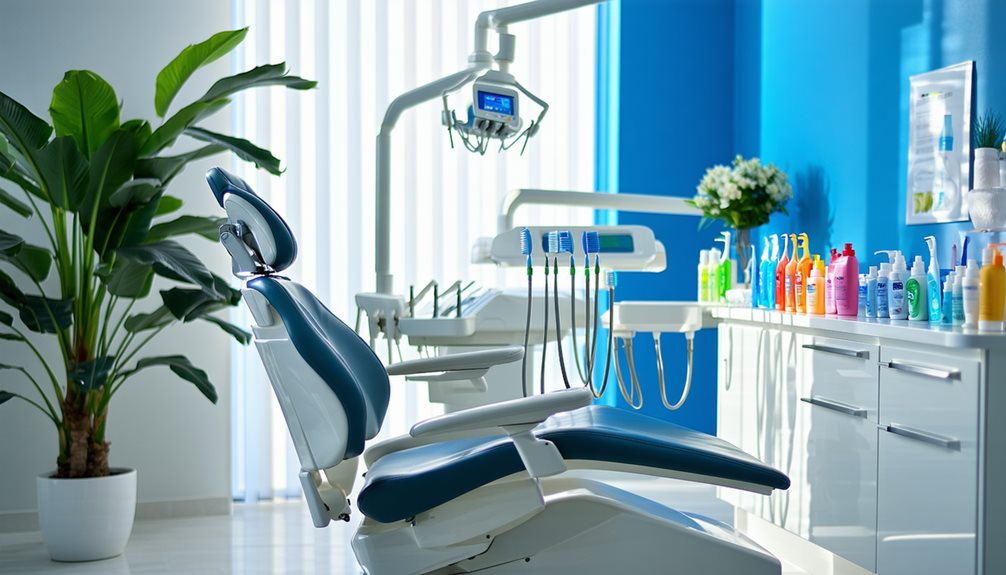
Ensuring ideal oral hygiene requires understanding and integrating key practices into your routine. Regular dental check-ups, ideally biannually, aid in early detection of dental issues and prevention of conditions like cavities and gum disease. Professional teeth cleaning is crucial for removing plaque and tartar, while fluoride treatments and dental sealants offer enhanced protection against decay. Digital X-rays provide precise diagnostics with minimal radiation exposure. Customized oral hygiene plans and nutritional counseling address individual needs, while night guards protect against bruxism. Finally, orthodontic evaluations enhance dental alignment. Explore these practices for thorough oral health management and discover more nuanced benefits.
Regular Dental Check-ups
Regular dental check-ups are a cornerstone of effective oral health maintenance, serving as a preventive measure to identify and address potential issues before they develop into more serious conditions.
These examinations, typically recommended biannually, allow for early detection of oral anomalies such as cavities, gum disease, and oral cancer, thereby mitigating the risk of extensive treatment or irreversible damage.
Despite the clear benefits, dental anxiety remains a notable barrier, often deterring individuals from seeking routine care. Addressing this requires a multifaceted approach, including patient education about modern, less invasive techniques and the integration of anxiety-reducing innovations such as virtual reality or sedation options.
Furthermore, insurance coverage plays a pivotal role in facilitating access to regular dental check-ups. Thorough insurance plans that include preventive care can greatly reduce out-of-pocket expenses, encouraging more frequent visits.
It is essential for dental professionals and policymakers to advocate for enhanced insurance schemes that encompass a broader range of preventive services to guarantee equitable access.
As the dental field continues to evolve, leveraging technology and policy innovation to alleviate dental anxiety and improve insurance coverage will be instrumental in promoting a culture of proactive oral health management.
Professional Teeth Cleaning
Professional teeth cleaning, conducted by a skilled dental hygienist, plays a critical role in maintaining oral health by effectively removing plaque and tartar accumulation that regular brushing alone cannot address.
Evidence indicates that routine cleaning appointments contribute to the prevention of periodontal disease and other oral health complications, underscoring their importance in a thorough oral hygiene regimen.
Selecting a trained and experienced hygienist guarantees the procedure is performed with precision and care, maximizing the therapeutic benefits while minimizing discomfort.
Benefits of Regular Cleaning
Engaging in routine professional teeth cleaning is a critical aspect of maintaining peak oral health. While home care practices such as regular brushing and flossing are indispensable, they are not always sufficient to remove tartar and plaque deposits that accumulate over time.
Professional cleanings effectively reach areas that are challenging to maintain through at-home oral care alone, greatly reducing the risk of periodontal disease and dental caries.
The benefits of regular cleaning extend beyond the prevention of oral ailments. Empirical evidence suggests that systematic professional cleanings contribute to improved systemic health outcomes.
Research indicates a correlation between oral health and the reduction of risks associated with cardiovascular diseases, as well as a potential decrease in complications related to diabetes. This underscores the necessity for integrating professional dental cleaning into one’s healthcare regimen.
From an innovative perspective, advancements in dental technology have enhanced the efficacy of teeth cleaning procedures. Techniques such as ultrasonic scaling and laser-assisted periodontal therapy exemplify cutting-edge innovations that optimize the removal of biofilm and calculus with precision and minimal discomfort.
Consequently, embracing these innovations not only fortifies oral health but also aligns with contemporary health optimization strategies that emphasize preventive care and holistic well-being.
Choosing a Skilled Hygienist
Selecting a skilled dental hygienist is a pivotal component of effective oral health management. The credentials of a dental hygienist, often evidenced by their educational background and certifications, are critical indicators of their ability to provide high-quality care. Hygienist qualifications typically include an associate degree in dental hygiene and state licensure, which mandates passing both written and clinical examinations. This rigorous training guarantees proficiency in advanced oral health practices, including periodontal therapy and preventive care techniques, essential for maintaining ideal oral hygiene.
Patient reviews serve as an invaluable resource in evaluating a hygienist’s competence and patient care quality. These reviews, often available through online platforms, provide insights into the hygienist’s professionalism, technical skills, and patient interaction. Positive feedback regarding their gentle approach, thoroughness, and ability to communicate effectively can be indicative of a high level of care.
Innovation-driven patients should seek hygienists who embrace modern dental technologies, such as digital radiography and ultrasonic cleaning tools, which enhance diagnostic accuracy and treatment efficiency.
Ultimately, choosing a hygienist with robust qualifications and favorable patient reviews is paramount to achieving superior oral health outcomes and fostering a progressive approach to dental care.
Fluoride Treatments
Fluoride treatments play an essential role in modern dental care by enhancing the resistance of enamel to acid attacks and inhibiting the development of cavities. The fluoride benefits are well-documented, with extensive research illustrating its efficacy in fortifying tooth structure and contributing to overall oral health.
Fluoride applications typically involve direct delivery of this mineral to the teeth through various modalities, including gels, foams, varnishes, and oral rinses. Each of these methods is designed to optimize fluoride uptake by the enamel, thereby maximizing its protective attributes against demineralization.
The mechanism by which fluoride exerts its beneficial effects involves the remineralization process, where fluoride ions integrate into the tooth enamel, forming fluorapatite. This compound is particularly more resistant to acid dissolution than hydroxyapatite, the natural mineral composition of enamel.
Consequently, routine fluoride treatments are recommended by dental professionals to maintain oral health, particularly in individuals at heightened risk for dental caries.
Innovative fluoride delivery systems continue to evolve, enhancing patient compliance and treatment outcomes. Tailoring fluoride applications to meet individual needs is an integral component of personalized dental care, reflecting the dynamic nature of preventive dentistry in today’s technologically advanced oral health landscape.
Dental Sealants
While fluoride treatments play an essential role in oral health, dental sealants offer an additional preventive measure by providing a physical barrier against decay. Dental sealants are thin, protective coatings applied to the chewing surfaces of molars and premolars, where pits and fissures are prone to plaque accumulation. These sealants act as a formidable defense, considerably reducing the risk of carious lesions by up to 80% in molars.
There are various dental sealant types, including resin-based and glass ionomer sealants. Resin-based sealants are favored for their durability and superior retention properties, while glass ionomer sealants release fluoride, contributing to remineralization and further decay prevention.
The application process is straightforward and minimally invasive. Initially, the tooth surface is thoroughly cleaned and etched with an acidic solution to enhance adhesion. Following this, the sealant material is carefully applied and cured using a light-curing device, ensuring rapid polymerization and ideal bond strength.
The implementation of dental sealants represents an innovative approach in preventive dentistry, particularly for children and adolescents, whose newly erupted permanent teeth are highly vulnerable. By integrating dental sealants into standard oral care protocols, dental professionals can advance patient outcomes and promote enduring oral health.
Digital X-rays
Advancing the scope of preventive dentistry, digital X-rays stand as a pivotal tool in diagnostic accuracy and patient care. These innovative imaging systems utilize digital technology to capture and store dental images electronically, offering considerable improvements over traditional film radiography.
The integration of digital technology not only enhances image clarity but also greatly reduces radiation exposure, enhancing patient safety.
Digital X-rays provide several advantages:
-
Reduced Radiation Exposure: By leveraging advanced digital sensors, digital X-rays lower radiation exposure by up to 80% compared to conventional X-rays, offering a safer diagnostic tool for patients.
-
Enhanced Image Quality: Digital X-rays produce high-resolution images, allowing for detailed visualization of dental structures. This increase in image quality aids in early detection of dental pathologies, facilitating timely interventions.
-
Immediate Results and Accessibility****: The instantaneous nature of digital X-rays allows for immediate review and diagnosis, streamlining patient appointments. Additionally, electronic storage ensures that images are accessible for future reference, enhancing continuity of care.
Incorporating digital X-rays into dental practice is a proof of the commitment to precision and patient-centered care.
Oral Cancer Screenings
Detecting early signs of oral cancer is essential in improving patient outcomes and reducing mortality rates. Oral cancer screenings are pivotal in the early detection of malignant transformations in oral tissues, offering a proactive approach to patient care. The incorporation of advanced diagnostic tools, such as fluorescence visualization and brush cytology, enhances the sensitivity and specificity of these screenings. Evidence suggests that early detection through such methods notably increases the five-year survival rate, underscoring the importance of regular examinations.
Oral cancer screening should be a routine component of extensive dental assessments. This process involves a thorough examination of the oral cavity, including the lips, tongue, and throat, to identify any atypical lesions or tissue changes.
For high-risk populations, such as individuals with a history of tobacco use or human papillomavirus (HPV) infection, more frequent screenings are advisable.
Innovation in diagnostic technology continues to evolve, offering promising advancements in the identification of premalignant conditions. Emerging techniques, including salivary diagnostics and molecular markers, hold potential for enhancing early detection capabilities.
As dental professionals, embracing these innovations not only aligns with best practices but also fosters an environment of cutting-edge patient care, ultimately contributing to the reduction of oral cancer prevalence.
Customized Oral Hygiene Plans
Customized oral hygiene plans are integral to optimizing individual oral health outcomes and are developed through a thorough assessment of a patient’s specific needs, including their medical history, lifestyle, and current dental health status.
By utilizing personalized care strategies, dental professionals can formulate tailored recommendations that address unique oral hygiene challenges and promote effective preventive measures.
Evidence-based approaches guarantee these plans are both scientifically sound and adaptable to the evolving oral health needs of each patient.
Personalized Care Strategies
The advent of personalized care strategies in oral hygiene represents a notable shift towards more effective and individualized dental care. By tailoring dental practices to the unique needs and circumstances of patients, these strategies leverage the power of personalized products and customized routines to enhance oral health outcomes.
Recent studies underscore the effectiveness of such approaches, highlighting how individualized plans can greatly reduce plaque accumulation, gingivitis, and other common oral health issues.
Incorporating personalized care strategies involves several key innovations:
-
Customized Oral Hygiene Plans: These are meticulously designed based on specific oral health profiles, incorporating factors such as genetic predispositions, lifestyle habits, and existing dental conditions. Personalized products like specialized toothbrushes and toothpaste formulations are often recommended to meet these unique requirements.
-
Advanced Technologies: The integration of cutting-edge technology, such as AI-driven apps and devices that monitor and guide oral hygiene practices, facilitates precise and real-time adjustments to routines, ensuring ideal results.
-
Interdisciplinary Approaches: Collaborating with nutritionists and medical professionals to address the broader health factors influencing oral health, personalized care strategies offer a holistic approach that extends beyond traditional dentistry.
Individual Needs Assessment
Understanding the intricacies of effective oral hygiene begins with a thorough individual needs assessment, which forms the cornerstone of customized oral hygiene plans. This assessment involves an extensive evaluation of personal habits and lifestyle factors, which are essential in developing an effective oral care regimen. By analyzing dietary patterns, tobacco use, and frequency of dental visits, dental professionals can identify risk factors that may predispose individuals to oral diseases.
Such assessments are supported by robust evidence indicating that personalized approaches yield superior outcomes compared to generic recommendations.
In the domain of innovative oral hygiene, a nuanced understanding of how individual lifestyle factors, such as stress levels and sleep quality, influence oral health is vital. These elements are often overlooked but can greatly affect periodontal health and caries development.
In addition, personal habits, including brushing techniques and flossing frequency, are examined to tailor interventions that enhance efficacy and adherence.
The integration of cutting-edge diagnostic tools, such as salivary diagnostics, enables clinicians to offer high-precision assessments, thereby ensuring that each customized plan aligns with the specific needs of the individual.
This personalized approach not only optimizes oral health outcomes but also encourages proactive patient engagement in maintaining their oral well-being.
Tailored Dental Recommendations
Emphasizing the importance of precision, tailored dental recommendations are formulated through a thorough analysis of individual oral health assessments. This approach guarantees that each patient receives personalized recommendations, maximizing the effectiveness of oral hygiene practices.
Such recommendations are grounded in evidence-based research, considering various factors such as genetic predispositions, lifestyle habits, and specific dental concerns. Consequently, patients benefit from a bespoke oral hygiene regimen, enhancing overall dental health and preventing future complications.
Incorporating cutting-edge technology, dental professionals can now offer customized products that cater to the unique needs of each individual. These innovations include:
-
Smart Toothbrushes: Devices equipped with sensors and artificial intelligence algorithms that provide real-time feedback on brushing techniques, ensuring ideal plaque removal.
-
Personalized Toothpaste Formulations: Tailored to address specific issues such as sensitivity or enamel strengthening, enhancing the effectiveness of daily oral care routines.
-
Custom-Fit Oral Appliances: Such as night guards and retainers, crafted to offer superior comfort and effectiveness based on precise dental impressions.
These advancements underscore the shift towards a more individualized approach to oral health, reflecting the ever-evolving landscape of dental care.
Embracing these innovative solutions enables patients to achieve a higher standard of oral hygiene, tailored specifically to their needs.
Nutritional Counseling
Nutritional counseling plays a pivotal role in maintaining ideal oral health by addressing dietary factors that contribute to dental diseases. Research indicates that poor dietary habits, such as excessive sugar consumption, can exacerbate the risk of caries and periodontal disease. By analyzing an individual’s dietary intake and habits, dental professionals can offer tailored advice that fosters peak oral health. This includes guidance on reducing sugar intake, increasing the consumption of fibrous foods, and emphasizing the importance of balanced nutrition.
Innovative approaches in nutritional counseling involve the integration of nutritional supplements to fortify oral health. For instance, calcium and vitamin D supplementation may be recommended to enhance bone density and tooth strength. Omega-3 fatty acids have been shown to possess anti-inflammatory properties, potentially mitigating periodontal inflammation.
In addition, probiotics are emerging as a promising adjunct in oral health management by modulating the oral microbiome.
Incorporating nutritional counseling into routine dental care not only mitigates the risk of oral diseases but also aligns with a holistic approach to wellness. By prioritizing evidence-based dietary interventions, dental professionals can empower patients to make informed decisions that enhance both their oral and systemic health, paving the way for innovative, preventative dental care.
Night Guards for Bruxism
Bruxism, a condition characterized by the grinding or clenching of teeth, often necessitates the use of night guards as a primary intervention to prevent dental damage. This protective device is essential for individuals who seek to mitigate the adverse effects of bruxism, which can stem from various causes such as stress, misaligned teeth, or sleep disorders.
Night guards, as a preventive measure, can considerably reduce the risk of enamel wear, tooth fractures, and temporomandibular joint disorders.
There are several night guard types available, each designed to address specific bruxism causes and individual needs:
-
Soft Night Guards: Ideal for mild cases of bruxism, these are made of pliable materials that provide comfort while offering basic protection against grinding.
-
Dual Laminate Night Guards: These are suitable for moderate bruxism, featuring a soft inner layer for comfort and a harder outer layer for durability.
-
Hard Night Guards: Recommended for severe bruxism cases, these are constructed from rigid acrylic materials, providing the highest level of protection.
Selecting the appropriate type of night guard is vital for best efficacy. Consulting with a dental professional guarantees a tailored solution, promoting innovative approaches in oral health management.
Orthodontic Evaluations
Orthodontic evaluations play a significant role in analyzing and planning treatment for dental alignment issues, ensuring ideal oral health and function. These assessments are vital in devising personalized treatment plans that address malocclusions, crowding, and bite discrepancies. Utilizing advanced diagnostic tools, such as 3D imaging and digital models, orthodontists can precisely identify the underlying causes of misalignment and determine the most effective intervention.
During the evaluation process, orthodontists perform thorough alignment checks, evaluating the spatial relationships and angulations of teeth. This enables the identification of potential areas requiring intervention, ensuring that treatment plans are both effective and minimally invasive.
In addition, routine braces maintenance is essential to sustaining progress throughout the treatment phase. This involves regular adjustments to the appliance tension, ensuring continuous movement of teeth into their desired positions while minimizing discomfort.
Incorporating cutting-edge technologies, such as computer-aided design (CAD) and intraoral scanners, has revolutionized the precision of orthodontic evaluations, providing detailed insights into individual dental anatomy. This facilitates the customization of braces or aligners, enhancing treatment efficacy.
As the field continues to innovate, orthodontic evaluations remain integral to advancing oral health outcomes, offering patients tailored solutions that align with contemporary standards of care.
Frequently Asked Questions
How Often Should I Replace My Toothbrush?
To maintain ideal oral health, it is recommended to replace your toothbrush every three to four months. Proper toothbrush storage guarantees longevity, preventing bacterial growth and maintaining the toothbrush lifespan for effective dental hygiene practices.
What Are the Best Practices for Flossing?
Ideal flossing techniques involve gently sliding floss between teeth, forming a ‘C’ shape around each tooth, and ensuring contact with the gumline. Evidence suggests flossing frequency should be daily for effective removal of interdental plaque.
Are There Natural Alternatives to Toothpaste?
Natural alternatives to toothpaste include herbal remedies and baking soda, both of which have demonstrated efficacy in oral health maintenance. Herbal remedies offer antimicrobial properties, while baking soda is effective in neutralizing acids and removing plaque.
How Can I Prevent Bad Breath Naturally?
To prevent bad breath naturally, incorporating herbal remedies such as green tea or parsley may be beneficial. Mouthwash alternatives like baking soda rinses can effectively neutralize odors, supported by evidence suggesting their antibacterial and odor-neutralizing properties.
What Is the Best Way to Clean a Tongue Scraper?
To maintain ideal hygiene, clean a tongue scraper by rinsing it with warm water, using a mild antibacterial soap, and drying thoroughly. Regular tongue cleaning techniques enhance oral health, ensuring effective and innovative tongue scraper maintenance.
Conclusion
To summarize, adopting ideal oral hygiene practices, including regular dental check-ups, professional teeth cleaning, and customized oral hygiene plans, greatly enhances oral health. Evidence-based interventions such as fluoride treatments, dental sealants, and digital X-rays contribute to the prevention of dental caries and periodontal diseases. Nutritional counseling and orthodontic evaluations further support thorough oral care. Additionally, night guards for bruxism provide essential protection against enamel erosion. Collectively, these practices form a robust framework for maintaining oral health and preventing future dental complications.

